Sunday, 10 November 2019

After Apple Picking ~ a Robert Frost poem


My long two-pointed ladder's sticking through a tree
Toward heaven still,
And there's a barrel that I didn't fill
Beside it, and there may be two or three
Apples I didn't pick upon some bough.
But I am done with apple-picking now.
Essence of winter sleep is on the night,
The scent of apples: I am drowsing off.
I cannot rub the strangeness from my sight
I got from looking through a pane of glass
I skimmed this morning from the drinking trough
And held against the world of hoary grass.
It melted, and I let it fall and break.
But I was well
Upon my way to sleep before it fell,
And I could tell
What form my dreaming was about to take.
Magnified apples appear and disappear,
Stem end and blossom end,
And every fleck of russet showing clear.
My instep arch not only keeps the ache,
It keeps the pressure of a ladder-round.
I feel the ladder sway as the boughs bend.
And I keep hearing from the cellar bin
The rumbling sound
Of load on load of apples coming in.
For I have had too much
Of apple-picking: I am overtired
Of the great harvest I myself desired.
There were ten thousand thousand fruit to touch,
Cherish in hand, lift down, and not let fall.
For all
That struck the earth,
No matter if not bruised or spiked with stubble,
Went surely to the cider-apple heap
As of no worth.
One can see what will trouble
This sleep of mine, whatever sleep it is.
Were he not gone,
The woodchuck could say whether it's like his
Long sleep, as I describe its coming on,
Or just some human sleep. 

Saturday, 9 November 2019

The Orchard Year ~ Winter

About this time last year we were asked to write an article for a new quarterly publication this is what we came up with:


Writing in early December and we’re already welcoming some of our favourite winter visitors, flocks of Fieldfare thrushes are arriving from Northern Europe to feast on fallen apples in the orchard. We’ll be enjoying their chatter and aerial displays for most of winter.


The trees themselves are entering dormancy now preparing for their winter hibernation with the fall of leaves. We grow a variety of British apples and plums here on our 8 acre Fenland orchard including the iconic Bramley. It’s Bramley apple trees you see framing the view from our tea room. They’re mature trees, some nearing 100 years of age.

Odd to think that Britain’s most famous cooking apple, Bramley’s Seedling, should by rights be known as Brailsford’s Seedling as the first Bramley tree was grown from seed, sometime between 1809 and 1813, by Mary Brailsford of Southwell, Nottinghamshire. 

It was after Mary’s death that the then owner of her cottage, Matthew Bramley, allowed nursery man Henry Merryweather to take grafts from the tree. Merryweather subsequently went on to win a Royal Horticultural Society First Class Certificate for Bramley’s Seedling in 1883 and the rest as they say is history with Bramley apples being grown commercially from the 1890’s onwards. Many a fruit growers fortune was made from the Bramley, travel around Fenland villages and you’ll come across quite a few large old houses bearing the name “Bramley House”, named for the apple that enabled the grower to build the house.


Sadly times have changed and lack of commercial viability and the ever pressing need for building land has seen the loss of over two thirds of English orchards since the 1950’s. Diversification is the name of the game for many growers hoping to save their orchards for future generations. 


Diversification first came in the form of a farm shop, a natural progression from the farm gate sales of apples, pears and plums. At first that’s all that was sold in the shop and it closed for several months of the year when the apples were all gone. Now days the farm shop is open 7 days a week and as well as selling our own fruit, grown on site in the orchard, stocks a variety of locally grown seasonal fruit and veg, freerange eggs, local honey, apple juice and homemade jams and chutneys. 


Further diversification came in 2012 with the opening of The Orchard Tea Room. Our location just a few hundred yards off the busy A47 at Wisbech makes it an ideal stopping place for drivers who wish to break their journey to and from Norfolk. It’s also a lovely amenity for local people, one of the few orchards that is open to the public on a daily basis, dogs are welcome and we host several charity dog shows throughout the summer months. We’re also delighted to be able to offer local artists exhibition space in our tea room. 


But no matter how much one diversifies from fruit growing the orchard trees still need tending and the winter months are some of the busiest of the year when the apple trees are pruned. So while our customers are enjoying tea and cake or a warming bowl of homemade soup by the log burner on a cold winter’s day some of us will be outside in the wind and rain pruning!

Another winter project, this time for the dark evenings at home, is to catalogue the vast number of apple recipes we’ve collected over the years, many of them given to us by customers. We sometimes share a recipe on The Orchard Tea Room blog http://theorchardtearoom.blogspot.com here’s one, given to us by a jam and pickle making local lady, that may be of interest to jam makers. It’s a recipe for fine shred orange marmalade made using apple jelly:

BRAMLEY APPLE JELLY MARMALADE

Ingredients:

2 kg of Bramley apples
4 large sweet oranges
Juice of a large lemon
Granulated sugar

Method:

Wash and peel the oranges, reserve the orange flesh.

Cut away the pith and shred the orange peel finely.

Put the shredded peel in a saucepan, cover with water bring to the boil then simmer for approximately an hour and half until the peel is soft. 

Strain and reserve the peel.

Wash and slice the apples and put them in a preserving pan along with the reserved orange flesh, lemon juice and enough water to cover.

Bring to the boil then simmer until the fruit is very soft.

Mash the fruit, then strain through a jelly bag, reserve the juice.

Measure the juice as you pour it back into the preserving pan.

Add 450 grams of granulated sugar to each pint of liquid.

Bring slowly to the boil stirring to dissolve the sugar then boil for 15 minutes whilst skimming to keep the jelly clear.

After 15 minutes add the cooked, shredded peel and continue to boil for a further 5 minutes or until set.

Remove from the heat, stir to distribute the peel and jar as normal. 

theorchardtearoom.co.uk

Saturday, 28 September 2019

A Dragonfly summer


We've had so many dragonflies and damselflies in the orchard these past few weeks, do you know how to tell the difference?

Well, dragonflies rest with wings outstretched whilst damselflies fold their wings together over their bodies when resting. Also damselflies tend to be smaller than the dragonfly and slower. 

We get lots of hawker dragonflies, they spend their time hawking to and fro in search of their insect prey, they're wonderful to watch but normally too fast for me to identify. The one I seem to most readily identify is a damselfly, the large red damselfly.

A book like The Natural History of Britain & Europe, edited by Michael Chinery, can be really helpful when it comes to the identification of dragonflies and damselflies, and loads of other insects, birds, mammals etc, that is where the above illustration comes from. 


It just so happens that we currently have a copy for sale in our secondhand book section for the princely sum of 50p. Now that's what we'd call a steal so if you want to know your Emperor Dragonfly from your Downy Emerald or your Brown Aeshna from your Banded Agrion you know where to come but you'd better be quick because it's unlikely to gather dust on the book shelves!

The Orchard Tea Room & Farm Shop
Redmoor Lane
Begdale 
Elm
Wisbech
Cambs
PE14 0RN

Telephone: 07527 046184

Website: theorchardtearoom.co.uk Twitter: @OrchardTeaRoom Facebook: The Orchard Tea Room
Opening Hours 10am-4pm daily

Tuesday, 3 September 2019

Apple and Carrot Cake


Our carrot cake is a firm favourite with tea room customers but if you'd like to try something a little different we're sharing a customer recipe for carrot and apple cake today: 

INGREDIENTS

250g butter divided into 2 portions of 125g each
250g caster sugar divided into 2 portions of 125g each
4 large eggs
100g plain flour
125g ground almonds
50ml milk
1 medium apple sliced
200g thinly sliced and diced carrot, the carrot slices should be much smaller than the apple slices.
1 tbsp cinnamon

METHOD

Preheat oven 180C / 350F / Gas mark 4

Line and grease a 8 inch cake tin

Melt 125g of butter and leave to stand 

Cream 125g of butter with 125g of butter, beat in 2 eggs into the creamed mixture then fold in the flour and add the milk. This mixture then goes into the prepared cake tin.

Next sprinkle the ground almonds evenly over the cake mixture then place the sliced apples and carrots on top of this mixture, making sure to keep them away from the edges.

Take the melted butter and beat in 125g of sugar, the 2 remaining eggs and the cinnamon. Pour this over your cake mixture.

Bake for approximately 1 hour, checking that it's fully cooked before removing from the oven. 

This cake should be left to cool before removing from the tin.

For an extra treat it's delicious served with  creme fraiche. 


Thursday, 8 August 2019

Norfolk Rocks


Look what I found sitting on the house leeks by the tea room terrace today
a sweet painted rock


and when I turned it over there was a special message from RG


"NORFOLK ROCKS
RE-HIDE 

OR
KEEP"

Do you know what I did? 

Well although very tempted to pop this in my pocket
I re-hid it to put a smile on someone else's face.

I don't know who you are but thank you RG for this sweet gesture.

I wonder how many more Norfolk Rocks are hiding up and down the country?

Thursday, 18 April 2019

Have a Hanami Easter at The Orchard Tea Room Wisbech ~ we have blossom


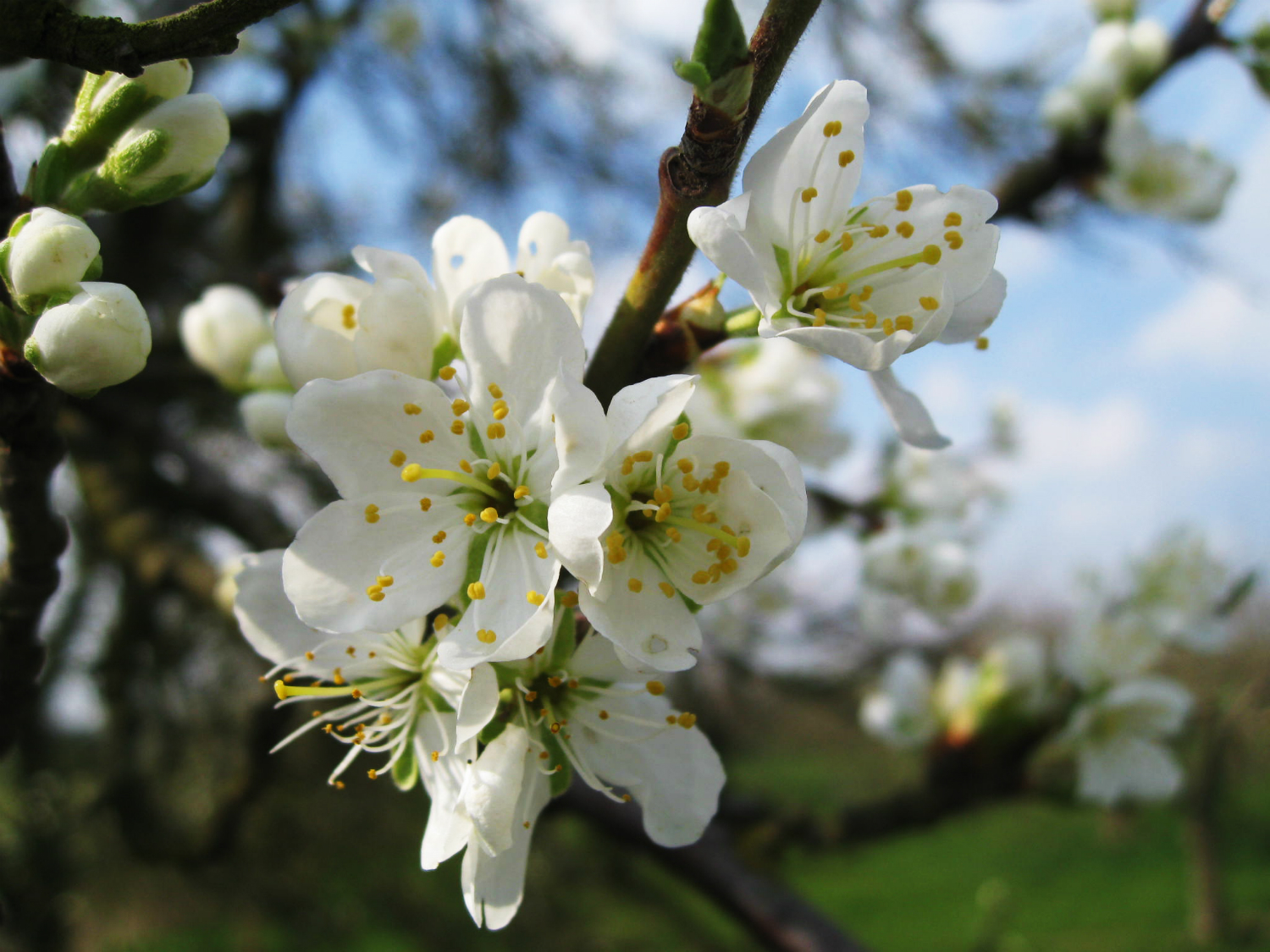
Our plum trees came into blossom very early this year and have been in full blossom since the end of March, 


followed swiftly by the cherries that can easily be viewed from the tea room.


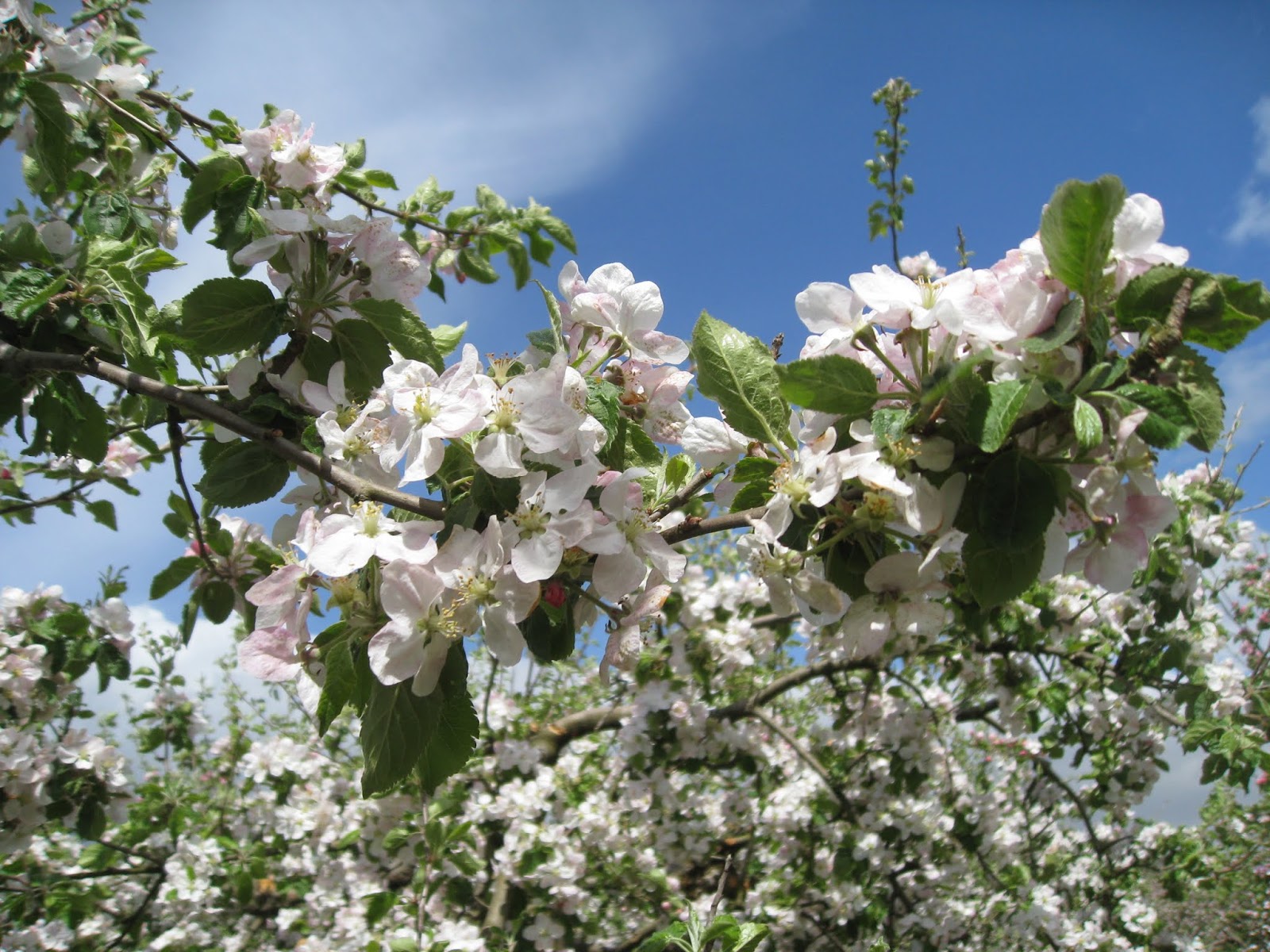
Much of the apple orchard is in bud


with some of the Ida Red trees now in blossom


if this warm spell continues they'll be in full blossom over the Easter weekend.

So it looks like we can have a Hanami Easter 

Opening Hours 10am-4pm daily

The Orchard Tea Room & Farm Shop
Redmoor Lane
Begdale 
Elm
Wisbech
Cambs
PE14 0RN

Telephone: 07527 046184

Website: theorchardtearoom.co.uk Twitter: @OrchardTeaRoom Facebook: The Orchard Tea Room

About Hanami:
"Hanami (花見, "flower viewing") is the Japanese traditional custom of enjoying the transient beauty of flowers; flowers ("hana") are in this case almost always referring to those of the cherry ("sakura") or, less frequently, plum ("ume") trees." 
https://en.wikipedia.org/wiki/Hanami

About Ida Red apples: 
Idared's aren't an English apple, they were developed at the University of Idaho Agricultural Experiment Station (hence the name Ida) in 1942. We grow them for their exceptional keeping abilities. Harvested in September / October they can actually be kept, in the correct conditions, up to June the following year. 


Saturday, 6 April 2019

Easter Flower School Saturday April 20th


Flower School returns for Easter
Join in the fun!


Saturday April 20th

11am - 2pm 


here at 

The Orchard Tea Room, Redmoor Lane, Wisbech, Cambs, PE140RN

Watch a demonstration by city and guilds qualified florist then have a go yourself, all flowers and sundries provided in the price which also includes scrumptious cake plus tea or coffee. 

(Please bring scissors if possible)

The course is just before Easter Sunday so you'll be leaving with a fabulous floral arrangement for your Easter table. 

Price per person is £18. Either pop into the tea room to book or text Mel on 07717553778 to book, she can accept payment via Paypal.

All profits to The Sunshine Centre for Therapeutic Riding.